

Ever stared at a mountain of boxes at 11 PM the night before your move, wondering how your life
choices led to this moment? You’re not alone. About 60% of movers admit to leaving packing until the
last 48 hours, turning what could be an organized transition into a stress tornado.
Let me save you from that midnight packing panic with some sanity-saving early prep strategies.
Starting your moving preparations early isn’t just about avoiding stress—it’s about giving yourself the gift
of control. The right early moving prep steps can slash your moving costs by up to 30% and protect your
most treasured possessions from the “just throw it anywhere” chaos.
But here’s what nobody tells you about early moving preparation: it’s not actually about packing earlier.
It’s about a completely different approach that changes everything…
Start Early: Why Timing Matters in Your Smooth Move

Reduced stress through proper planning
Ever tried packing your entire life into boxes the night before moving day? It’s about as fun as a root
canal.
Starting your move prep early is like giving your future self a massive gift. Instead of the frantic last
minute stuffing of random items into whatever container you can find, you get to methodically work
through your belongings room by room.
When you have weeks rather than hours, you can actually think about what goes where. No more
“mystery boxes” that you’ll be unpacking three years later. You’ll sleep better too – nothing ruins your
night like knowing you have 24 hours to pack what should take two weeks.
Better deals on moving services
Moving companies aren’t dumb. They know desperate customers will pay premium prices.
Book movers 6-8 weeks in advance and you’ll often score early bird discounts that last-minute bookers
never see. Plus, you get your pick of dates and times rather than taking whatever scraps are left.
The same goes for supplies. Rush-ordering boxes and packing materials costs way more than gradually
collecting them. And don’t get me started on the premium you’ll pay for next-day storage unit rentals.
Time for sorting and decluttering
The brutal truth? Half the stuff in your home probably shouldn’t make the trip to your new place.
With an early start, you can thoughtfully decide what stays and what goes. Host a garage sale, list items
online, donate to charity, or simply enjoy the satisfaction of filling your trash bins to the brim.
This isn’t just about making your move easier – it’s about not paying to transport items you’ll throw away
at your new place anyway.
Opportunity to address unexpected challenges
Here’s what always happens when you wait until the last minute: surprises. Bad ones.
Maybe your couch won’t fit through the door frame. Perhaps your new building requires a certificate of
insurance from movers. Or you discover your new place needs repairs before you move in.
Starting early gives you margin to handle these inevitable curveballs. Instead of panicking, you’ll have
time to measure doorways, complete paperwork, or schedule contractors.
Early prep isn’t just smart – it’s your insurance policy against moving day nightmares.
Creating Your Moving Timeline

A. 8 weeks before: Initial planning and research
Moving isn’t something you want to tackle at the last minute. Trust me, I’ve seen the meltdowns. Start
your journey two months ahead by grabbing a notebook or creating a digital file dedicated to your move.
First, figure out your budget. Moving costs add up fast – from boxes to movers to that pizza you’ll
definitely order on moving day. Write down every expected expense.
Next, research moving companies if you’re not going the DIY route. Read reviews, ask friends, and get
at least three quotes. The cheapest option isn’t always the best when it comes to handling your
grandmother’s china.
Start a simple inventory of what’s coming with you. Don’t worry about being super detailed yet – just go
room by room making general notes.
This is also the perfect time to measure doorways and spaces in your new place. That sectional sofa
might be your pride and joy, but it’s worthless if it won’t fit through the door.
B. 6 weeks before: Booking services and starting to sort
Time to pull the trigger on booking your movers! The good ones get booked fast, especially during peak
moving season. Get that deposit paid and your date locked in.
Now comes the fun part – sorting through your stuff. Start with the easy wins: out-of-season clothes,
books you’ve already read, and kitchen gadgets collecting dust.
Create three piles: keep, donate/sell, and trash. Be ruthless. That bread maker you used once in 2018?
Someone else might actually use it.
This is also when you should order packing supplies. You’ll need more boxes than you think, plus tape,
markers, bubble wrap, and packing paper.
Start notifying important parties about your move:
- Give your landlord notice
- Schedule transfers for utilities
- Update your address with your bank
- Request medical records if you’re changing doctors
C. 4 weeks before: Packing non-essentials
The one-month mark means it’s time to get serious about packing. Start with the stuff you rarely use
holiday decorations, off-season gear, fancy dishes, and those books that make you look smart but you
never actually read.
Label each box with both its contents AND the room it belongs in. Future you will be incredibly grateful.
Use this time to eat through your pantry and freezer. Creating meals based on what you already have
saves you from moving food and saves money too.
Take photos of electronic setups before dismantling them. Nothing’s more frustrating than staring at a
tangle of unlabeled cords in your new place.
If you have kids, involve them by letting them pack a special box of items they’ll want right away in the
new home. Same goes for pets – set aside their essentials so they don’t get lost in the shuffle.
D. 2 weeks before: Finalizing details
You’re in the home stretch! Confirm your moving date and details with your movers. Double-check their
insurance coverage and make sure you understand their policies on fragile items.
Pack a “first night” box with essentials you’ll need immediately:
- Toilet paper
- Shower curtain
- Basic toiletries
- Pajamas
- Phone chargers
- Basic tools for assembling furniture
Make arrangements for kids and pets on moving day. Trust me, having toddlers or anxious dogs
underfoot while carrying heavy furniture is a recipe for disaster.
Clean out your fridge and defrost the freezer if you’re taking it with you.
Start deep-cleaning rooms you’ve already packed up and don’t need to use anymore.
E. Moving week: Last-minute preparations
This is it – the final countdown! Pack your suitcase like you’re going on a week-long trip. Include enough
clothes, medications, and toiletries to get by without having to dig through boxes.
Charge all your devices the night before the move.
Do a final walkthrough of every room, opening all drawers and cabinets to make sure nothing gets left
behind.
Prepare an envelope with important documents and any cash you might need for moving day:
- Moving company contract
- New lease or home closing papers
- IDs and insurance cards
- Cash for tipping movers
Take meter readings and photos of your empty old place for security deposit purposes.
Finally, take a deep breath. The work you’ve put in over the past two months means your move will go as
smoothly as possible. You’ve got this!
Smart Packing Strategies
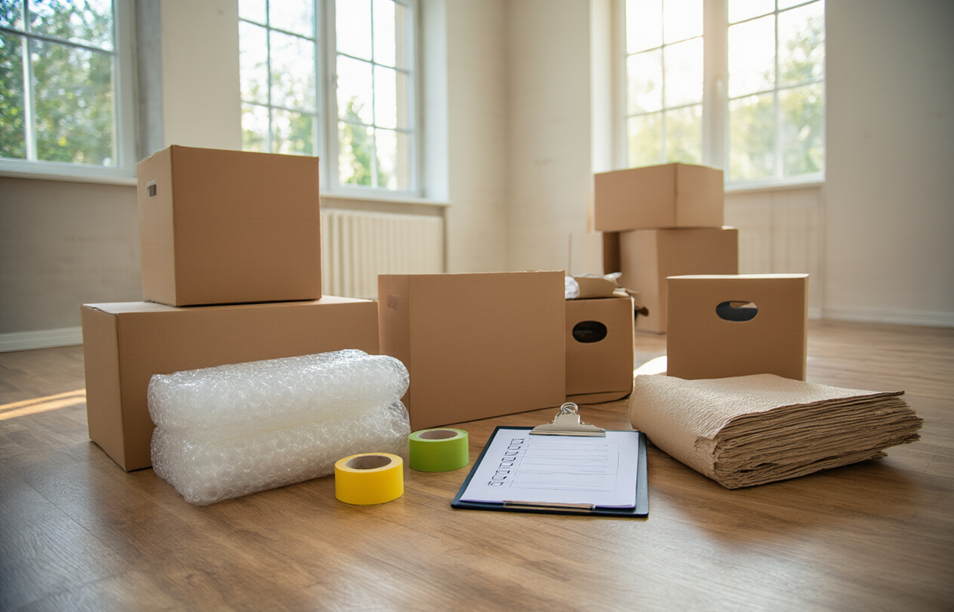
Room-by-room approach
Packing up your entire home can feel like climbing Mount Everest in flip-flops. Don’t do that to yourself.
Start with the rooms you use least—guest bedrooms, storage closets, basements. These are perfect first
targets because you won’t miss that stuff while it’s boxed up.
Create a simple system: finish one room completely before moving to the next. This keeps you from
having half-packed chaos throughout your home.
The kitchen usually takes the longest (all those weird-shaped items!), so give yourself extra time there.
Bathrooms can be quick wins—pack them right before moving day since you’ll need those essentials
until the end.
Essential packing supplies checklist
Nothing kills packing momentum faster than running out of supplies. Stock up on:
- Boxes (various sizes, but more medium boxes than you think—heavy items in small boxes, light
- items in big ones)
- Packing tape (get the good stuff with dispensers)
- Bubble wrap and packing paper (newspaper leaves ink stains!)
- Markers for labeling
- Box cutters
- Furniture blankets
- Plastic wrap for keeping dresser drawers closed
- Ziplock bags for hardware and small parts
Pro tip: Those free liquor store boxes? They’re sturdy enough for books and kitchen items.
Labeling system that saves time
Randomly labeled boxes = future you cursing past you. Try this instead:
Color-code each room (blue for bathroom, red for kitchen). Mark each box with:
- Room destination
- Brief content list (not just “kitchen stuff”)
- Priority level (1-3, with 1 being “open me first”)
Take photos of box contents before sealing them up—this beats digging through 12 boxes to find the
coffee maker.
What to pack first vs. last
Pack in this order:
First:
- Seasonal items you won’t need (winter coats in summer)
- Books and decorative items
- Extra linens and towels
- Last:
- Out-of-season clothes
- Artwork and wall hangings
Last:
- Everyday dishes and cooking essentials
- Toiletries and medications
- Bedding for beds you’re still using
- Cleaning supplies
- Important documents (keep these with you, not in the moving truck)
Pack a separate “first night” box with sheets, towels, coffee maker, and phone chargers. When you’re
exhausted on moving day, you’ll thank yourself for thinking ahead.
Organizing Important Documents
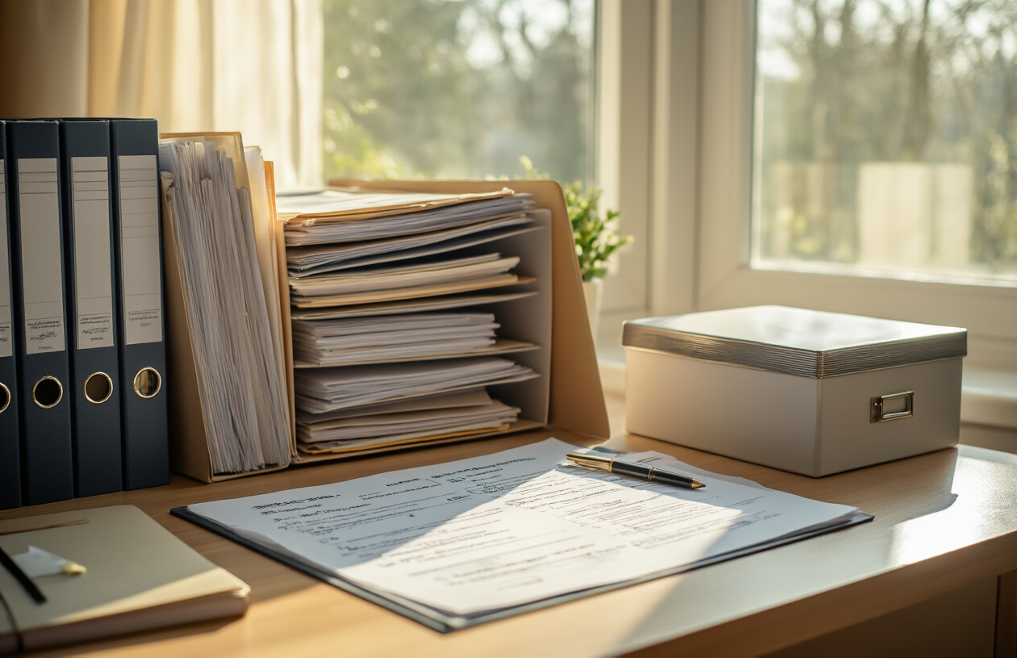
Creating a moving binder
Ever lost your mind trying to find your lease agreement while the moving truck’s idling outside? Yeah, me
too. That’s why a moving binder is basically your lifeline during relocation chaos.
Grab a three-ring binder and some dividers. Nothing fancy required. Create sections for:
- Moving quotes and contracts
- Housing documents (lease/mortgage papers)
- Utilities (disconnection and connection confirmations)
- Inventory lists
- Moving timeline and to-do lists
- Receipts (for tax deductions and reimbursements)
Your binder should be the ONE place you look for anything move-related. Keep it with you during the
move – not packed away in some mystery box you’ll never find.
Digital backups of critical papers
Paper gets lost. Coffee gets spilled. Dogs get hungry. That’s why digital backups aren’t optional
anymore.
Snap photos or scan these essentials:
- Birth certificates
- Passports
- Social security cards
- Insurance policies
- Medical records
- School transcripts
Store them in a password-protected cloud service (Google Drive, Dropbox, whatever floats your boat).
And yes, back them up on a flash drive too. Double protection never hurt anyone.
Change of address checklist
Forgetting to update your address is like sending an invitation to identity thieves. Here’s who needs your
new info:
- USPS (file the official change form 2 weeks before moving)
- DMV (usually required within 30 days)
- Banks and credit card companies
- Insurance providers (health, auto, home)
- Employers and tax agencies
- Subscription services (magazines, boxes, streaming)
- Online shopping accounts (update that Amazon default address!)
Pro tip: Set up mail forwarding even if you think you’ve notified everyone. There’s always something
you’ll forget.
Hiring the Right Help

A. Researching moving companies
Moving companies aren’t created equal. Some will treat your vintage record collection like their own,
while others might see your grandmother’s china as just another box to toss around.
Start by asking neighbors, friends, and family about their experiences. Real people giving real opinions
beats any glossy advertisement.
Then hit up review sites like Yelp, Google Reviews, and the Better Business Bureau. Look for patterns in
complaints – one bad review might be a fluke, but ten mentioning broken items? That’s a red flag waving
in your face.
Don’t forget to check if they’re properly licensed. For interstate moves, verify their DOT number through
the Federal Motor Carrier Safety Administration (FMCSA). For local movers, check your state’s
transportation department requirements.
B. Questions to ask before booking
When you’re interviewing potential movers, go in prepared:
“How long have you been in business?”
“Do you subcontract any work?”
“What insurance options do you provide?”
“What happens if something breaks?”
“Are there any extra fees I should know about?”
“Can I get that in writing?”
That last question might feel awkward, but it’s your best defense against surprise charges.
Ask about their cancellation policy too. Life happens, plans change, and you don’t want to lose your
deposit over circumstances beyond your control.
C. Understanding quotes and contracts
Moving quotes come in three flavors:
- Non-binding: An estimate that could change based on actual weight/time
- Binding: A guaranteed price that won’t change
- Not-to-exceed: You pay either the estimate or less if the actual cost is lower
Read your contract like your wallet depends on it—because it does. Watch for:
- Inventory lists
- Liability coverage details
- Delivery windows (not just dates)
- Extra fees for stairs, long carries, or weekend service
- Cancellation terms
Don’t sign anything with blank spaces. Ever.
D. When to consider DIY vs. professional movers
Hiring pros makes sense when:
- You’re moving cross-country
- You own antiques or specialty items
- Physical limitations make heavy lifting dangerous
- Your time is more valuable than money
- You’re moving during peak season
DIY works better when:
- You’re moving locally
- You don’t own many heavy items
- Your budget is tight
- You have willing friends
- You’re moving mid-week or off-season
Remember that DIY isn’t free—truck rental, gas, supplies, pizza for helpers, and potential injuries all cost
something.
E. Coordinating friends and family assistance
If you’re recruiting your squad for moving day, make it worth their while:
- Give at least two weeks’ notice
- Be specific about start and end times
- Assign roles based on strengths (your gym buddy handles the heavy stuff, your organized friend
- packs the kitchen)
- Prepare proper supplies so nobody’s standing around
- Feed them well—moving on an empty stomach is miserable
- Express genuine appreciation afterward
Consider a hybrid approach: hire pros for the heavy furniture and recruit friends for packing and
unpacking. This gives you professional help where it matters most while keeping costs manageable.
Setting Up Your New Space in Advance

A. Measuring and planning furniture placement
Getting your furniture placement right before moving day is a game-changer. Trust me, you don’t want to
be shoving that king-sized bed around your new bedroom at midnight.
Grab a measuring tape and jot down dimensions of:
- All rooms in your new place
- Doorways and hallways (crucial for that oversized couch)
- Your existing furniture
Create a basic floor plan on paper or use free apps like Magicplan or RoomSketcher. Play around with
furniture arrangements virtually before breaking a sweat in real life.
Quick tip: Take photos of your current setup before dismantling everything. You’ll thank yourself when
reassembling that complicated bookshelf.
B. Transferring utilities ahead of time
Nobody wants to shower in the dark on moving day. Call utility companies at least two weeks before
your move to:
- Schedule service transfers (electricity, water, gas)
- Set up internet and cable (providers often need 1-2 weeks’ notice)
- Update your address with service providers
Don’t forget the small stuff:
- Trash collection
- Mail forwarding (can be done online through USPS)
- Streaming services and subscriptions
C. Cleaning before you move in
An empty apartment is the easiest to clean! Swing by your new place a day or two before with these
essentials:
- All-purpose cleaner
- Bathroom disinfectant
- Vacuum or broom
- Paper towels and rags
Focus on the grimiest spots first:
- Inside cabinets and drawers
- Refrigerator and oven
- Bathroom fixtures
- Floors and baseboards
D. Creating an unpacking priority list
Not all boxes are created equal. Label your most important boxes with bright tape and unpack in this
order:
- Essentials box (toilet paper, medications, phone chargers)
- Bedroom basics (sheets, pillows, pajamas)
- Bathroom necessities (shower curtain, towels, toiletries)
- Kitchen fundamentals (coffee maker, dishes, utensils)
- Everything else
Pro move: Take photos of box contents before sealing them. When you need something specific, check
your photos instead of ripping open every box.

The journey to a new home doesn’t have to be overwhelming. By starting your preparations well in
advance, creating a detailed timeline, employing smart packing techniques, and organizing your
important documents, you can transform what might have been a stressful experience into a
manageable transition. Hiring reliable moving professionals and taking steps to set up your new space
before arrival further streamlines the process.
Remember that successful moves aren’t about rushing at the last minute—they’re about thoughtful
planning and execution over time. Take the pressure off yourself by breaking the moving process into
smaller, achievable tasks. Your future self will thank you for the early preparation that made your move
not just smooth, but perhaps even enjoyable.