

Ever stared at a mountain of boxes the night before your move, wondering how you got here? You’re not
alone. A whopping 58% of Americans admit they started packing less than a week before moving day.
I’m about to save you from joining that statistic (and the stress that comes with it).
Smart moving preparation isn’t just about starting early—it’s about having a system that works. From
creating room-by-room inventories to packing strategies that make unpacking a breeze, this guide
covers everything you need for an efficient move without the last-minute panic.
The difference between a smooth transition and a nightmare moving day often comes down to one thing.
Want to know what separates the organized movers from the frazzled ones?
Understanding the Importance of Pre-Move
Planning

A. Time and Cost Savings with Proper Preparation
Ever started packing the night before your move? Yeah, it’s a nightmare.
Rushing leads to poor decisions that hit your wallet hard. Last-minute movers charge premium rates.
Same-day supplies? Expect to pay double. Not to mention the takeout costs when your kitchen is
packed up.
Smart planners save serious cash. Book movers 6-8 weeks out and you’ll typically save 15-25%. Even
better, you’ll have time to compare quotes from multiple companies. Those bargain boxes from grocery
stores or online marketplaces? They’re often free if you plan ahead.
Time savings are just as valuable. With proper prep, you can:
- Pack systematically over weeks, not days
- Declutter before packing (why move stuff you don’t need?)
- Label properly to save hours during unpacking
- Schedule utilities and address changes without rush fees
B. Reducing Stress Through Organization
Moving ranks among life’s top stressors. But preparation is your secret weapon against chaos.
The worst moving stress comes from uncertainty and surprise. When you’ve got a solid plan, your brain
can relax. You’re not scrambling at 2 AM wondering where your phone charger is.
Create a moving binder or digital folder with:
- Your timeline with clear milestones
- All confirmation numbers and contacts
- Floor plans of your new place
- Inventory lists by room
Break big tasks into smaller chunks. Instead of “pack the kitchen,” try “pack pantry items” one day and
“pack dishes” another.
C. Avoiding Common Moving Pitfalls
I’ve seen the same mistakes trip people up time after time.
The biggest blunder? Underestimating. People consistently underestimate the time needed to pack, the
supplies required, and how much stuff they actually own.
Other classic mistakes include:
- Not researching moving companies (hello, scammers!)
- Forgetting to measure furniture for the new space
- Packing essentials you’ll need immediately
- Skipping the inventory (then wondering where things went)
- Forgetting to transfer utilities and services
Prevention is simple: start early, make lists, and give yourself buffer time. For every moving task, add
30% more time than you think you’ll need.
Remember that one day of good planning saves three days of headaches later.
Creating Your Comprehensive Moving Timeline

A. 8 Weeks Before: Initial Planning and Research
The moment you know you’re moving, grab a notebook and start your master plan. Trust me, future-you
will be grateful.
First, nail down your budget. Moving costs add up fast – trucks, boxes, pizza bribes for friends who help.
List everything, then add 20% because something always pops up.
Start researching moving companies now if you’re going that route. The good ones book up quickly,
especially during summer months. Get at least three quotes and check their reviews thoroughly. That
bargain mover might cost you a fortune in broken lamps and headaches.
Create a simple folder (physical or digital) for all moving-related paperwork. Quotes, receipts, new lease
agreements – toss them all in one place.
Now’s also the time to measure doorways and rooms in your new place. That sectional you love might
become a very expensive sidewalk donation if it doesn’t fit.
B. 4-6 Weeks Before: Sorting and Decluttering
Time to face that junk drawer (and closet, and garage). The golden rule of moving: if you haven’t used it
in a year, you probably don’t need it.
Sort everything into four piles:
- Keep
- Sell
- Donate
- Trash
Be ruthless. Moving stuff costs money and energy. That bread maker you used once in 2019? The
exercise equipment doubling as a clothes hanger? Let them go.
For items worth selling, list them now while you have time. Facebook Marketplace, eBay, neighborhood
apps – wherever works. The cash will help with moving expenses.
For donations, schedule a pickup if possible. Many charities will come right to your door.
Start collecting boxes from local stores or friends who recently moved. Liquor stores have sturdy boxes
perfect for heavy items.
C. 2-3 Weeks Before: Packing Non-Essentials
Start with the easy stuff – seasonal items, books, decor, and things you rarely use. Your Christmas
decorations can definitely go into boxes now.
Label everything obsessively. Not just “Kitchen” but “Kitchen – Baking Supplies” or “Kitchen – Coffee
Station.” Your bleary-eyed moving-day self will thank you.
Pack room by room rather than jumping around. It keeps things organized and gives you that sweet
dopamine hit of completing something.
Take photos of electronic setups before unplugging. Those cable arrangements won’t magically make
sense in your new place.
Use clothes, towels, and linens as free packing materials. Wrap dishes in t-shirts. Stuff shoes with socks.
Fill gaps in boxes with sweaters.
Create a “first night” box with essentials – toilet paper, shower curtain, phone chargers, basic toiletries,
and a change of clothes.
D. Final Week: Last-Minute Preparations
This is crunch time. Focus on essentials and logistics.
Confirm details with your moving company or friends who are helping. Double-check dates and times.
Clean as you go. It’s easier to wipe down empty shelves than doing it all on moving day.
Defrost your refrigerator 24-48 hours before moving day if you’re taking it with you.
Pack a personal bag with important documents, medications, valuables, and enough clothes for a few
days. Keep this with you, not in the moving truck.
Transfer or cancel utilities, internet, and subscriptions. Schedule these changes to happen right after you
move out.
Charge all your devices the night before. Moving day isn’t the time for a dead phone battery.
Get cash for tips or last-minute needs. Order food delivery for moving day – you won’t feel like cooking.
Take meter readings and photos of your empty place for deposit purposes. Document any existing
damage in your new place before moving in.
Essential Packing Strategies for a Smooth Move
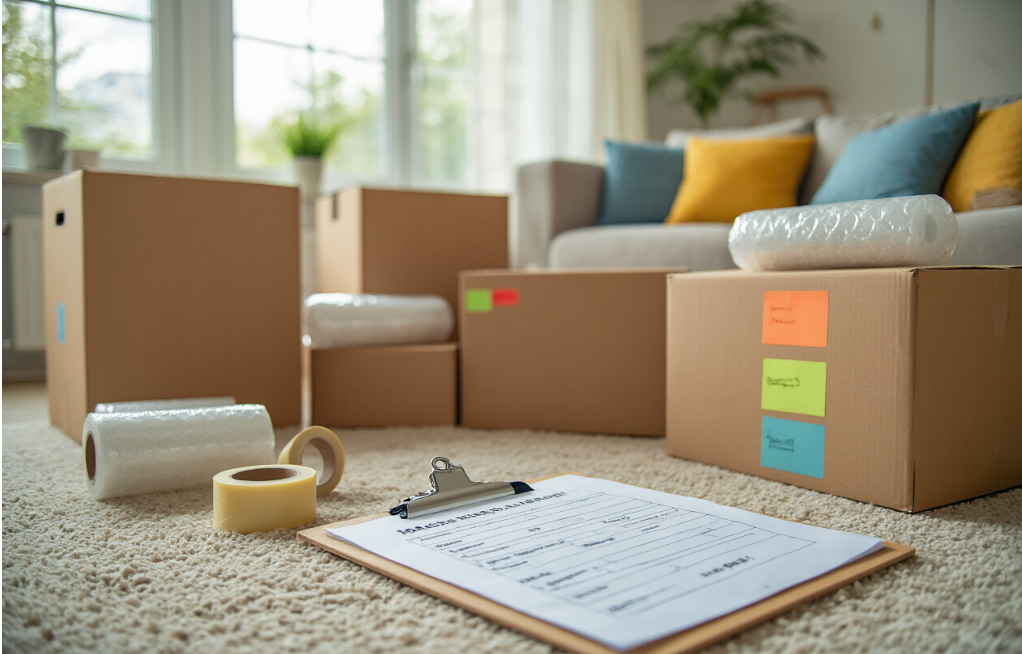
Room-by-Room Packing System
Packing up your entire home? Tackling it all at once is a recipe for disaster.
Start with the rooms you use least – like guest bedrooms, storage areas, or seasonal items. Your
everyday essentials from the kitchen and bathroom should be the last things you pack.
Create a simple checklist for each room:
- Remove items from walls first
- Empty all drawers and cabinets
- Sort into keep, donate, and trash piles
- Pack similar items together
This isn’t just about organization – it’s about maintaining your sanity. When you focus on one room at a
time, you’ll see actual progress rather than feeling overwhelmed by the mountain of stuff.
Smart Labeling Techniques
Those “Kitchen Stuff” labels? They’re useless when you’re trying to find the coffee maker on your first
morning in the new place.
Get specific with your labeling:
- Write the room AND the contents
- Use color-coded stickers for each room
- Mark priority boxes with stars or “OPEN FIRST”
- Note which side should face up
Take a photo of what’s inside before sealing each box. Trust me, two weeks into unpacking when you
desperately need that one thing, you’ll thank yourself.
Fragile Item Protection Methods
Newspaper might be cheap, but it leaves ink stains and doesn’t offer much cushioning.
Here’s what actually works:
- Bubble wrap for dishes and glassware (wrap each piece individually)
- Microfiber towels for electronics
- Pool noodles sliced lengthwise to protect picture frames
- Socks for stemware (plus your socks get packed too!)
- Original boxes for expensive electronics (yes, keeping them was worth it)
The extra time spent protecting fragile items saves money and heartache later. Nothing’s worse than
unpacking grandma’s china to find it in pieces.
Efficient Box Selection and Usage
Not all boxes are created equal. Using random boxes from the grocery store is penny-wise but pound
foolish.
Match your boxes to your items:
- Heavy items (books, records) go in small boxes
- Light, bulky items (pillows, comforters) go in large boxes
- Wardrobe boxes keep clothes on hangers (massive time-saver)
- Dish barrel boxes have extra protection for kitchenware
Fill empty spaces with soft items like towels or clothing instead of buying packing peanuts. It saves
space and money.
Digital Inventory Management
Spreadsheets aren’t just for budgets anymore. A digital inventory system saves countless headaches.
Try this three-step system:
- Number each box as you pack it
- Create a spreadsheet with columns for box number, room, contents, and priority
- Take photos of valuable items with their condition before packing
When you need to find something specific, just search your spreadsheet instead of opening dozens of
boxes. This system is particularly valuable for insurance claims if anything gets damaged during the
move.
Choosing the Right Moving Services

DIY vs. Professional Movers: Pros and Cons
Moving yourself might seem like a money-saver, but is it really? Let’s break it down.
DIY moving means total control – you pack what you want, when you want. Got fragile heirlooms? You’re
handling them personally. Need to move at 2 AM? No one’s stopping you.
But here’s the catch – DIY comes with hidden costs:
- Truck rental fees (plus gas and mileage)
- Equipment rentals (dollies, furniture pads)
- Your valuable time (packing, loading, driving)
- Physical exhaustion (and potential injuries)
- Friends who suddenly “remember” other commitments
Professional movers cost more upfront but include:
- Experience handling awkward items
- Insurance coverage
- Proper equipment
- Speed (what takes you all day takes them hours)
- Zero back pain the next morning
Truth bomb: DIY moves often end up costing nearly as much as hiring pros when you factor in
everything.
Evaluating Moving Companies: What to Look For
Not all moving companies deserve your business. Here’s how to spot the good ones:
First, check their credentials. Legitimate movers have:
- Department of Transportation number
- Proper licensing
- Physical business address (not just a website)
- Clear, written estimates
Red flags? Companies that:
- Demand cash deposits before moving day
- Have no reviews (or suspiciously perfect ones)
- Give estimates without seeing your stuff
- Use rented trucks with magnetic signs
Get at least three estimates. Wildly low bids usually mean hidden fees or inexperienced crews.
Ask neighbors and friends who’ve moved recently. Their horror stories or glowing recommendations tell
you more than any website.
Understanding Moving Insurance Options
Most people don’t realize standard moving coverage pays pennies on the dollar for damages.
The basic “released value protection” (free with most moves) typically covers just 60 cents per pound.
That means your 50-pound TV worth $1,000 gets you a whopping $30 if broken.
Better options include:
- Full Value Protection: The company repairs, replaces, or pays the current market value for
- damaged items. Costs more but worth it for valuable belongings.
- Third-Party Insurance: Separate policies from insurance companies providing more
- comprehensive coverage.
- Declared Value Coverage: You declare the value of specific high-value items.
Don’t just nod when movers mention insurance. Ask specifically: “What’s covered if my stuff breaks?”
Get the answer in writing before signing anything.
Your homeowner’s policy might offer some protection during moves, but check with your agent first
many policies exclude moving damage.
Setting Up Your New Space Before Moving Day

Floor Plan Preparation for Furniture Placement
Ever walked into your new place with a massive couch only to realize it won’t fit through the doorway?
Yeah, that’s a moving day nightmare you can totally avoid.
Grab your measuring tape and create a basic floor plan before you even pack a single box. Measure
doorways, hallways, and stairwells at your new place. Trust me, knowing your sofa is actually going to fit
through the front door is a game-changer.
Take photos of each room from multiple angles. This gives you a visual reference when you’re planning
where everything goes. Then sketch out where major furniture pieces will land in each room.
Apps like MagicPlan or RoomSketcher can turn your measurements into digital floor plans in minutes.
No more guesswork about whether the bed fits against that wall.
Utility and Service Transfers
Nothing worse than arriving at your new place sweaty from moving only to find the electricity’s not on.
Been there. Not fun.
At least two weeks before moving:
- Schedule electricity and water transfers
- Set up internet installation (providers often need 1-2 weeks notice)
- Update your address with banks, insurance, and subscription services
- Arrange for gas service if applicable
Don’t forget to confirm everything a few days before. I once had a friend who forgot to confirm her
internet installation—ended up working from coffee shops for a week.
Essential First-Day Items Box
This is non-negotiable. Pack a separate “Day One” box with everything you’ll need for the first 24 hours.
What to include:
- Toilet paper (seriously, don’t forget this)
- Bed sheets and pillows
- Phone chargers
- Basic toiletries and shower curtain
- Coffee maker and mugs (or whatever your morning essential is)
- Simple tools like screwdrivers and pliers
- Paper plates and plastic utensils
- Cleaning supplies
- Snacks and bottled water
Label this box clearly and transport it in your personal vehicle—not the moving truck. This way, even if
everything else is in chaos, you’ve got the bare essentials covered.

Getting ready for a move doesn’t have to be overwhelming when you approach it strategically. By
understanding the importance of pre-move planning, creating a detailed timeline, implementing smart
packing strategies, carefully selecting the right moving services, and preparing your new space in
advance, you can transform what is often a stressful experience into a manageable process.
Take the time to prepare thoroughly before your moving day arrives. Your future self will thank you for
the effort you put into planning as you settle into your new home with minimal stress and maximum
efficiency. Remember, the success of your move isn’t determined on moving day itself, but in the
thoughtful preparation that happens in the weeks leading up to it.