

Ever stood in your kitchen surrounded by boxes, wondering if all your dishes survived the chaos of
moving day? You’re not alone. About 60% of Americans rate moving as the most stressful life
event—even above divorce and new jobs.
But here’s the thing: your moving experience doesn’t have to be a horror story. Professional home
organization during relocation can transform that mountain of cardboard into a manageable molehill.
When you implement smart organization strategies for moving, you’re not just packing stuff—you’re
setting up your new beginning for success. Your first morning won’t be spent frantically searching for the
coffee maker while still in pajamas.
What’s the secret technique that professional organizers use that makes unpacking feel almost…
enjoyable? It starts with a system most movers completely overlook.
The Psychology of Organization in Relocation

How preparation reduces moving anxiety
Moving ranks right up there with divorce and job loss on the stress scale. But here’s the thing – most of
that anxiety comes from feeling out of control.
When you’ve got boxes everywhere, no idea where your essentials are, and a ticking clock – your brain
goes into panic mode. It’s not just annoying; it’s biologically hardwired.
Your brain hates uncertainty. That’s why preparation works like magic for moving stress.
Picture this: you’ve got a detailed timeline, labeled boxes, and a clear plan. Suddenly your brain switches
from “everything is chaos!” to “I’ve got this handled.” That shift isn’t just psychological – it triggers actual
chemical changes, reducing cortisol (the stress hormone) and boosting those feel-good endorphins.
People who prep properly report up to 70% less moving-related stress. Not surprising when you think
about it. When you can literally check things off a list, your brain gets little hits of accomplishment
dopamine all day long.
Building confidence through systematic planning
Nothing builds moving confidence like breaking down the monster task into bite-sized pieces.
When you create a system – whether it’s packing one room at a time or dedicating specific days to
specific tasks – you’re essentially creating a roadmap your brain can follow without freaking out.
This systematic approach isn’t just about efficiency; it’s about building your moving muscles gradually.
Each completed task reinforces the belief that you can handle the next one.
Think of it like training for a marathon. You don’t run 26 miles on day one. You build up, celebrating small
victories along the way.
The confidence spills over too. People who master organized moves often report feeling more capable in
other life areas. That planning muscle gets stronger with use
The positive mental impact of a well-organized move
The benefits of an organized move stick around long after the boxes are unpacked.
That mental clarity you develop while organizing a move becomes a template for handling other complex
life situations. The skills transfer surprisingly well – from prioritizing tasks to making decisions under
pressure.
Beyond just avoiding stress, an organized move creates positive momentum for your new chapter.
Instead of spending your first weeks in a new place hunting for your coffee maker or work clothes, you’re
free to explore your neighborhood, set up your space exactly how you want it, and actually enjoy the
fresh start.
Many people report that an organized move helps them mentally close one chapter and open another.
There’s something psychologically powerful about knowing exactly what you’re bringing into your new life
and why.
Creating Your Ultimate Moving Timeline

8 weeks before: Laying the foundation for success
Moving day might seem far off, but this is when the real magic happens. Grab a notebook and create
your master plan. List every room, every closet, and yes, even that junk drawer you’ve been avoiding.
Call moving companies now—the good ones book up fast. Get at least three quotes and check their
reviews. Trust me, the cheapest option isn’t always the smartest move.
Start collecting boxes everywhere you can. Liquor stores, grocery outlets, and office supply shops often
give them away for free. Why pay for cardboard?
Time to purge. Be ruthless. That pasta maker you used once in 2018? Gone. Those “someday” jeans?
Donate them. For every item, ask yourself: “Would I buy this again today?” If the answer is no, it’s not
coming to your new place.
4 weeks before: Accelerating preparations
The countdown is real now. Start packing non-essentials—seasonal clothes, books, decorative items,
and that fancy china you never use.
Label everything like your sanity depends on it—because it does. Write the contents AND the destination
room on each box. Future you will be incredibly grateful.
Notify everyone about your address change: banks, subscription services, Amazon (obviously),
insurance companies, and your great-aunt who still sends birthday cards.
Schedule utility disconnections and connections. Nothing worse than moving into a dark house with no
internet. Been there, regretted that.
1 week before: Final coordination steps
Pack a survival kit with essentials for your first few days: toiletries, medications, phone chargers, clean
underwear, and coffee supplies (non-negotiable).
Clean as you go. Each emptied cabinet gets wiped down immediately. Your landlord will thank you, and
so will your security deposit.
Confirm details with your movers—arrival time, payment method, and parking arrangements. Send them
your new address and the best route to get there.
Empty and defrost your refrigerator 24 hours before departure. Nobody needs that mystery tupperware
liquid spilling during transport.
Moving day: Executing with precision
Wake up early. Like, really early. Everything takes longer than you think.
Dress comfortably in clothes with pockets. You’ll need somewhere to stash your phone, keys, and the
snacks that will keep you from getting hangry.
Do a final walkthrough of every room, opening every drawer and cabinet. Check behind doors, under
appliances, and in that weird space above the kitchen cabinets.
Keep important documents, valuables, and irreplaceable items with you, not in the moving truck. Your
birth certificate doesn’t belong with your blender.
Tip your movers if they’ve done a good job. They’ve just carried your entire life up three flights of stairs.
A little appreciation goes a long way.
Essential Organization Tools for Streamlined Moves
Digital apps that revolutionize relocation planning
Moving used to mean drowning in paper lists and sticky notes. Not anymore.
The right apps turn moving chaos into something actually manageable. Sortly lets you create visual
inventories with photos and QR codes for each box. MoveAdvisor builds customized timelines based on
your move date, sending reminders when it’s time to schedule utilities or change your address.
For the budget-conscious (aren’t we all during a move?), apps like Moved act as your personal assistant,
coordinating quotes from service providers and keeping all your moving tasks in one place.
My personal favorite? Evernote. I created a moving notebook with checklists, photos of how electronics
were wired, and measurements of furniture and doorways. Three moves later, I still reference that
notebook.
Physical organization systems worth investing in
Skip those flimsy free boxes from the liquor store. Trust me, your back and belongings will thank you.
Invest in sturdy plastic bins with locking lids for items you’ll access frequently during the move process.
They stack better, protect contents from moisture, and can be reused for storage in your new place.
Wardrobe boxes with hanging rods? Game changers. Your clothes move straight from closet to closet
without wrinkling.
Don’t forget about:
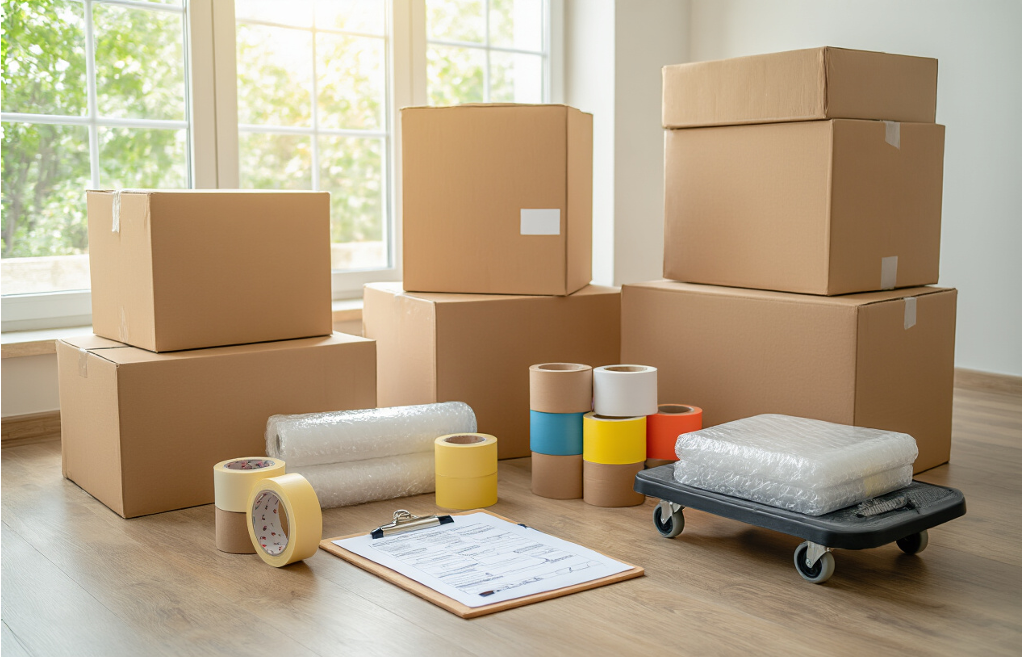
- Color-coded packing tape for different rooms
- Furniture sliders (floors everywhere will thank you)
- Heavy-duty stretch wrap for keeping drawers closed during transport
- Space-saving vacuum bags for bulky bedding and seasonal clothes
Labeling strategies that save hours of unpacking
Terrible labeling is why most people end up opening fifteen boxes looking for the coffee maker on day
one.
Create a simple system and stick to it. Write the destination room AND contents on multiple sides of
each box. “KITCHEN – Everyday Dishes” beats “Kitchen Stuff” every time.
Take it up a notch with priority labels. I use a 1-3 system:
- Priority 1: Open immediately (bedding, shower curtain, coffee maker)
- Priority 2: Within first week
- Priority 3: When you get around to it
For tech items and furniture that need reassembly, tape an envelope with screws and instructions
directly to the item or include it in a clearly marked “PARTS” box.
Photograph the contents of boxes before sealing them. When you’re desperately searching for your
phone charger at 11pm, you’ll be glad you did.
Room-by-Room Organization Strategies
Kitchen packing techniques that prevent breakage
Packing up your kitchen? It’s basically a ticking time bomb of breakables. But here’s the good news
with a few smart moves, you can avoid that heartbreaking sound of shattering glass.
Start by grabbing some cell dividers (you know, those cardboard grids for wine bottles) for your glasses
and stemware. No dividers? No problem. Slip those glasses into clean socks. Sounds weird, works like
magic.
For plates, stack them vertically like records in a box, not flat. They’re stronger on their edges and less
likely to crack under pressure this way.
Your kitchen gadgets deserve special treatment too:
- Wrap sharp knives in old dish towels, then secure with rubber bands
- Tape cabinet doors and drawers shut on appliances
- Use your pot lids as frisbee-shaped dividers between fragile items
Take pictures of your complex appliance setups before dismantling them. Trust me, “future you” will be
incredibly grateful when setting up the new coffee machine.
Bedroom organization that maintains sanity
The bedroom chaos during a move can make anyone lose their mind. Let’s prevent that.
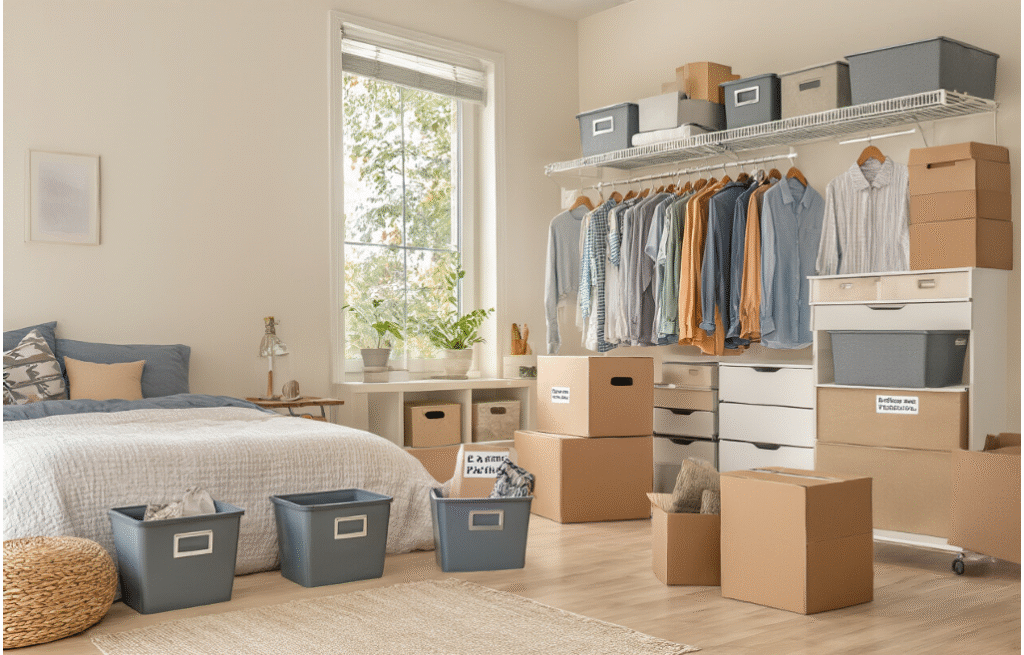
First, separate your immediate essentials. Pack a suitcase like you’re going on a two-week trip
complete with outfits, pajamas, and underwear. This becomes your survival kit.
For the rest:
- Roll clothes instead of folding to save space and prevent wrinkles
- Use vacuum bags for bulky seasonal items you won’t need right away
- Keep hanging clothes actually hanging with garbage bag method – slip them over clusters of
- hangers and tie at the bottom
Label your boxes with specific contents, not just “clothes.” “Winter sweaters” is infinitely more helpful
than “bedroom stuff” when you’re searching for something specific.
And don’t forget about your bedding strategy. Pack sheets, pillowcases, and a comfort item in a clearly
marked box you’ll open first. Nothing worse than finishing a grueling moving day and not knowing where
your sheets are.
Living spaces: Prioritizing what you’ll need first
Living rooms contain everything from essential electronics to purely decorative items. The key is knowing
what you’ll want immediately versus what can wait.
Create a “First Night” box containing:
- Basic entertainment (tablet, books, portable speaker)
- Phone chargers and extension cords
- A few family photos or comfort items
- Remote controls (labeled for which device they control)
When packing electronics, take pictures of how the cords connect before unplugging anything. Tape
those cords to the devices they belong to, or better yet, put each device and its accessories in separate
ziplock bags.
For decorative items, be ruthless. Ask yourself: “Will I notice if this isn’t displayed for a month?” If the
answer is no, it goes in the “eventually” pile.
Furniture disassembly is another headache. Put all hardware in labeled ziplock bags and tape them
directly to the furniture piece they belong to. Your future self will thank you when it’s time to rebuild
everything.
Bathroom essentials: Accessibility planning
Bathroom packing requires strategic thinking about what you’ll need immediately versus what can stay
boxed up for weeks.
Create a dedicated “shower kit” with:
- Shampoo, conditioner, body wash
- Toothpaste, toothbrushes, floss
- Medications and first aid supplies
- Shower curtain and rings (often forgotten!)
For toiletries that might leak, remove the cap, place plastic wrap over the opening, then replace the cap.
This simple trick has saved countless suitcases from shampoo disasters.
Makeup and skincare deserve special attention. Keep your daily essentials separate from the once-a
month items. And remember to pack a roll of toilet paper and hand soap in your “open first” box
nothing worse than making that realization too late!
For medicine cabinets, now’s the perfect time to check expiration dates and dispose of old medications
properly. Only bring what’s current and necessary.
Garage and storage areas: Decluttering before packing
Garages and storage spaces are the final boss of moving. They’ve likely accumulated years of “I might
need this someday” items.
Start with a brutal three-pile system:
- Keep and pack
- Sell or donate
- Trash or recycle
Be honest with yourself. That half-empty paint can from 2017? You’re not touching it again. Those sports
equipment pieces gathering dust? Time to find them a new home.
For tools, sort by frequency of use. The everyday toolkit should travel with you separately from specialty
tools. Use empty egg cartons to organize screws, nails, and small parts.
Heavy-duty plastic bins beat cardboard boxes for garage items that might have residual dirt or oil. Label
everything obsessively – not just “tools” but “power tools” or “gardening tools.”
And remember: moving hazardous materials requires special care. Most moving companies won’t
transport paint, chemicals, propane, or gas. Plan to use them up, give them away, or dispose of them
properly before moving day.
Setting Up for Success in Your New Space

A. First-day essentials box: What to include
Walking into your new home with zero access to basic necessities is a rookie mistake you don’t want to
make. Trust me, I’ve been there—frantically digging through random boxes at midnight looking for
toothpaste.
Your first-day box should include:
- Toiletries (toilet paper, shower essentials, toothbrush and paste)
- Bed linens and pillows
- Phone chargers and extension cords
- Basic tools (screwdriver, hammer, box cutter)
- Paper towels and cleaning supplies
- Medications
- A change of clothes
- Snacks and bottled water
- Paper plates, cups and plastic utensils
- Shower curtain and rings
B. Strategic unpacking order for minimal stress
The chaos of moving day gets so much worse when you’re opening random boxes with no plan. Start
with these rooms in this exact order:
- Kitchen – Set up just enough to make coffee and simple meals
- Bathroom – Nothing worse than needing to shower with no towels in sight
- Bedroom – You’ll need somewhere to crash after all that moving
- Living areas – These can wait until you’ve handled the essentials
Pro tip: Fully finish one room before moving to the next. Seeing one completed space gives you a mental
win and a sanctuary amid the moving madness.
C. Establishing organization systems from day one
Getting organized from the jump saves you from that “still living out of boxes six months later” situation.
Before you unpack a single non-essential item:
- Install closet organizers and shelving
- Designate specific drawers for categories (no junk drawers yet!)
- Create a mail processing station near your entry
- Set up recycling and trash systems
- Label storage spaces
Don’t just shove things anywhere “for now” – that “now” becomes “forever” faster than you think. Taking
an extra hour to thoughtfully assign homes to your belongings saves weeks of frustration later.

Making Your Move a Success Through Organization
Moving doesn’t have to be overwhelming when you approach it with proper organization. By
understanding the psychological benefits of an organized move, creating a detailed timeline, utilizing
essential tools, implementing room-by-room strategies, and planning your new space setup in advance,
you can transform a typically stressful experience into a manageable and even positive one.
Take the time to prepare properly before your next move. Your future self will thank you for the effort you
put into organization now. Remember that a well-organized move doesn’t just make the transition
smoother—it sets the foundation for a stronger start in your new home and helps you begin this next
chapter of your life with confidence and clarity.